Power, Restraint, and Responsibility: Leadership Lessons from the Wild of Kenya

Fellow leader: in my last LeadersBlog, I shared how our Kenya safari slowed us down enough to see clearly. This time, I want to talk about what we saw once our eyes adjusted, specifically, what watching animals in the wild taught me about power, restraint, and responsibility.
Safari mornings start early, but not all early mornings are the same.
One morning, most of the group departed at 6:00 a.m. to catch the sunrise from the Land Cruisers. Lynn and I stayed back to enjoy the quiet of our cabin – the soft light filtering through the trees, the sounds of the bush waking up. Moments later, Immanuel arrived, as he did every morning, with coffee, tea, and a few biscuits. No hurry. No wasted words. Just thoughtful care.
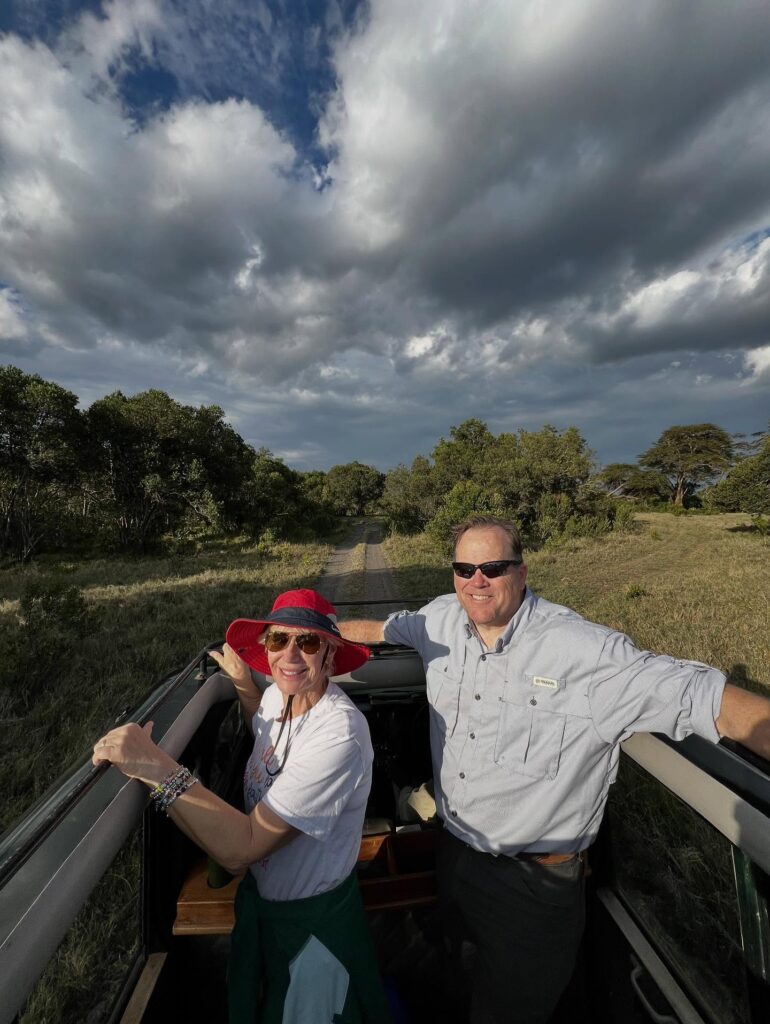
We left at 6:30, the only passengers in the Land Cruiser with our driver Sam. Over time, we’d learned that the earliest hours can sometimes be deceptively quiet. Animals don’t perform on command. They move when it’s time to move.
That, in itself, is a leadership lesson.
Watching Power at Work
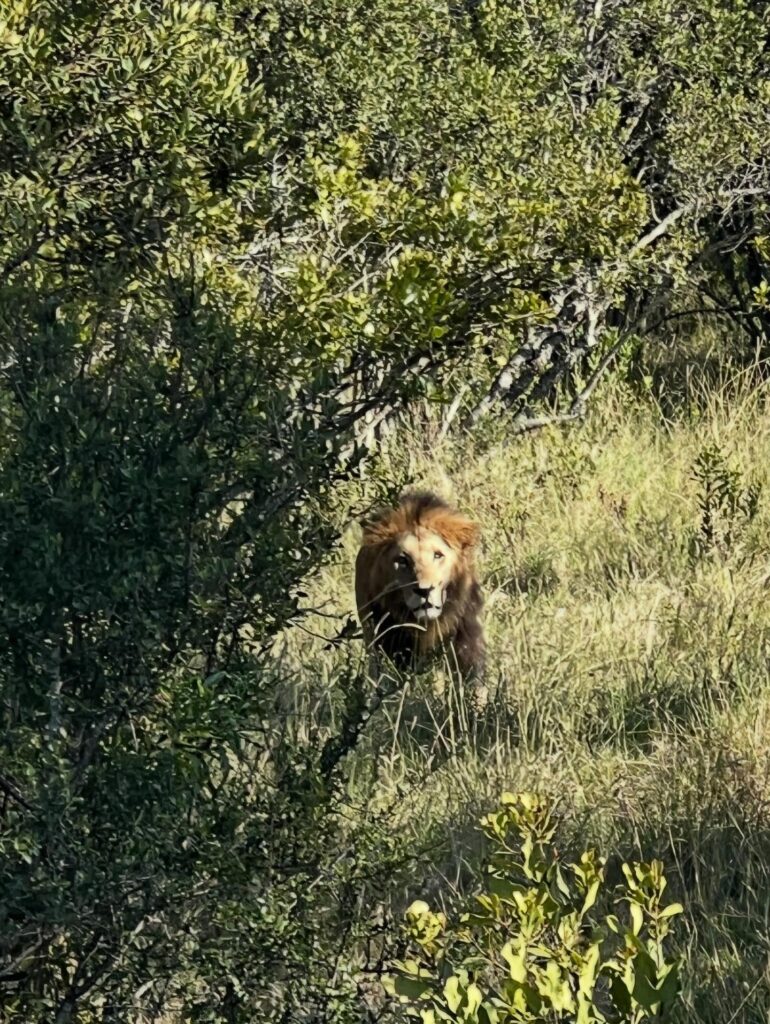
The most remarkable sight that morning was a group of three young lions attempting to take down a Cape buffalo.
From a distance, it appeared almost casual. But as we watched, the strategy emerged. Two lions lay hidden in the tall grass while the third circled wide, intentionally positioning himself to drive the buffalo toward the ambush. No noise. No brute force. Just patience and coordination.
This wasn’t speed – speed belongs to the cheetah.
Lions hunt with cunning.
When the moment came and the first lion revealed himself, the buffalo broke and ran – straight toward the lions concealed in the grass. For a brief moment, success seemed inevitable. Then one of the lions stumbled. Literally tripped head-over-tail.
The buffalo escaped. The hunt failed. And oddly, it was reassuring.
Even the most powerful creatures in the wild make mistakes. Even well-designed plans don’t always work. Power, it turns out, is never as flawless as we imagine it to be from a distance.
Power Without Humility Is Fragile
In leadership, we often confuse power with certainty. Titles, authority, influence, and resources can give the illusion that outcomes are guaranteed.
They aren’t.
The lions had power. They had numbers. They had a plan. But power doesn’t eliminate vulnerability – it amplifies responsibility.
Leadership lesson #1: Power requires humility.
The stronger your position, the more aware you must be of how easily things can go wrong.
That tripping lion stayed with me. Not just because it was humorous (it was!), but because it was honest. Leaders stumble. What matters is not pretending we don’t but learning from it.
Speed Versus Wisdom
On our very first night drive we saw a cheetah, lying calmly in the grass near a dirt road, completely unconcerned with our presence.
Cheetahs hunt with speed. Explosive acceleration. Little margin for error.
Lions hunt with patience and strategy – positioning and teamwork.
Both approaches work – but only in the right context.
Leadership lesson #2: Speed is impressive. Wisdom is sustainable.
In business culture, speed is celebrated. Move fast. Decide faster. Act now. But the wild reminded me that speed without alignment wastes energy. Wisdom waits.
The Discipline of Restraint
Later that day, we shared brunch at a long table set up in the brush overlooking a small stream. No walls. No rush. Just conversation and the quiet awareness that we were guests in someone else’s world.
The afternoon unfolded slowly: rest, a cooking class, dinner on the veranda as the sun slipped away.
Then came the night drive.
I held the powerful spotlight as we bounced across the bush. Little movement. Zebras in the distance. Giraffes behind them, tall and alert. Eventually, we joined the other Land Cruisers to see a pride of lions lying together in the grass.
Not hunting. Not moving. Just being.
Leadership lesson #3: Restraint is not weakness. It is discipline.
Those lions weren’t lazy. They were conserving energy, staying connected to the pride, waiting for the right moment. Leaders who feel the need to always act, always speak, or always intervene often weaken the very system they’re trying to lead.
Sometimes the strongest move is stillness.
Responsibility Grows With Influence
What struck me most was how little the animals wasted – energy, movement, effort. Everything had purpose. Everything mattered.
In leadership, wasted effort often comes from insecurity. We act to be seen. We speak to prove authority. We decide too quickly to feel in control.
The Kenyan bush offered a different model: influence that is quiet, intentional, and accountable to the environment it inhabits.
Watching animals in their natural rhythm reminded me that leadership isn’t about constant action. It’s about wise action.
And wisdom – like a successful hunt – requires patience, restraint, humility, and deep respect for the responsibility that comes with power.
In the next post, I’ll reflect on what the people of Kenya: our guides, hosts, and staff – taught me about faith, dignity, and servant leadership in ways no textbook ever could.